
Summary
In this lesson, students analyze the system of federalism and its application within the United States at the federal, state, and local levels of government. Students examine a political cartoon to develop an understanding of the need for different levels of government. Students then examine scenarios related to the roles of federal, state, and local government and read about federalism and its application in the United States. Students further extend their learning and make real-world connections by watching a video interview with Oklahoma City Mayor David Holt to learn more about careers in public service. To conclude the lesson, students write a summary of their learning in which they discuss the structure of the United States government.
Essential Question(s)
How do the federal and state governments share powers within the framework of the Constitution? How does the U.S. determine the powers and responsibilities of government at the federal and state levels?
Learning Objectives
Explain the structure of the U.S. Government to better understand how federal and state offices or politicians interact with each other.
Recognize and describe the advantages or disadvantages of federalism.
Apply knowledge gained from this lesson to identify which level or branch of government is responsible for a given issue.
Snapshot
Engage
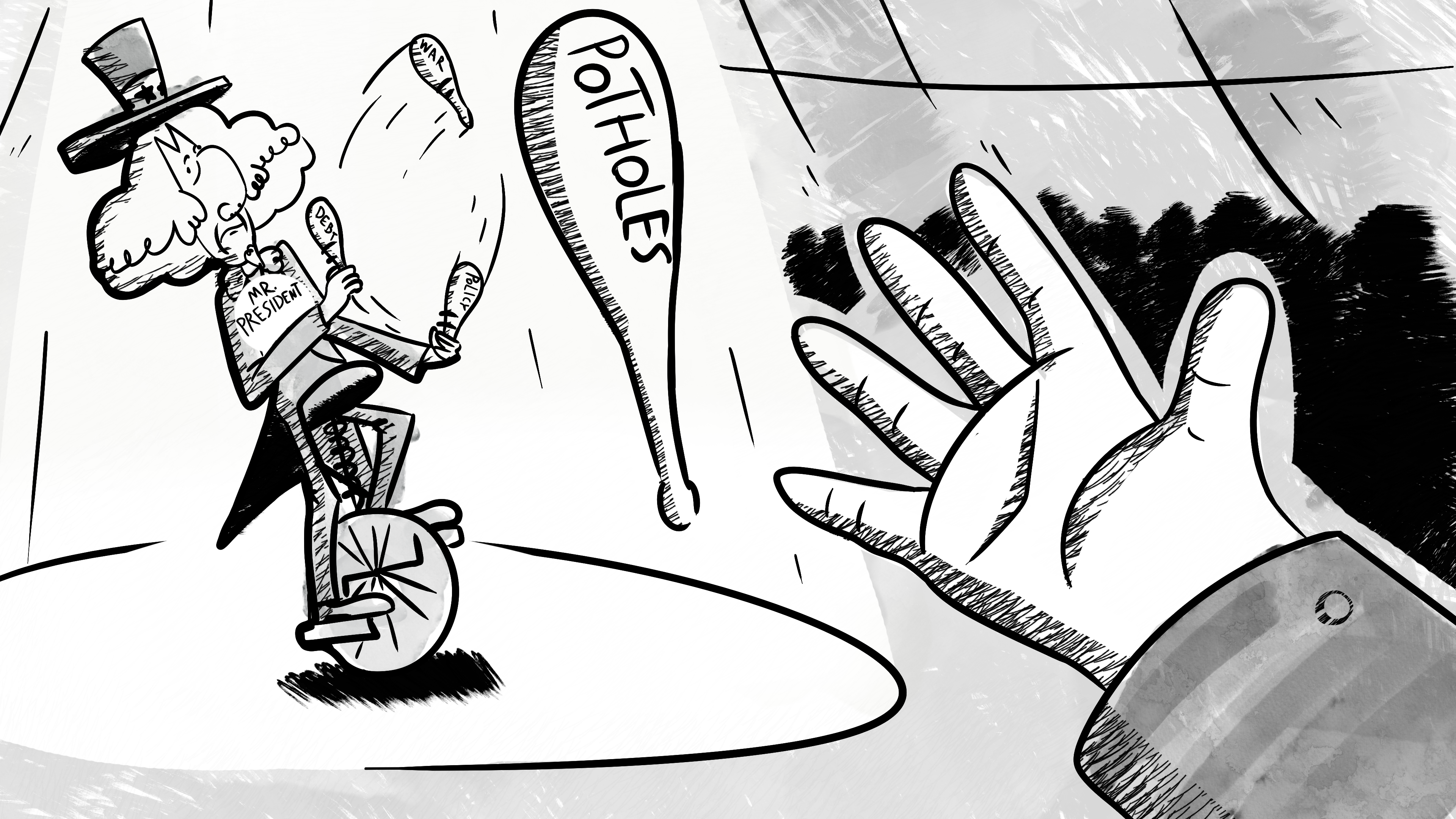
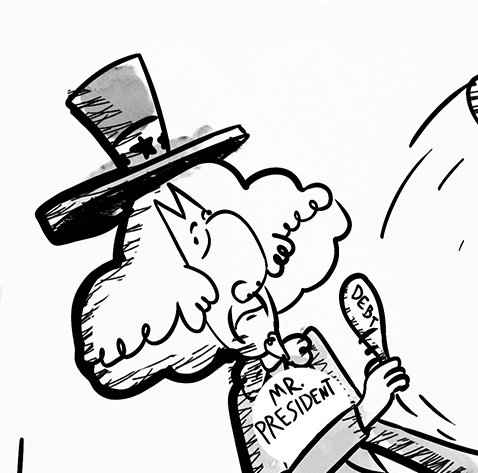
Students examine a political cartoon about federalism and discuss the message of the cartoon.
Explore
Students connect scenarios to the levels of government responsible for those scenarios and justify their reasoning.
Explain
Students read an article about federalism and summarize their understanding of the levels of government.
Extend
Students watch an interview with Oklahoma City Mayor David Holt then discuss the roles of elected officials and public service careers at the state and local levels of government.
Evaluate
Students reflect on their learning by reviewing the components of the lesson and writing a summary of their learning.
Materials
Lesson Slides (attached)
It’s OPTIC-al handout (attached; one per student)
Political Cartoon (attached; optional)
Federalism Posters (attached; one set per class)
Scenario Cards (attached; optional; one set per group; see note in Explore)
Inside Out handout (attached; one per student)
Federalism Article (attached; one per student)
Card Sort (attached; one set per two students)
Gist handout (attached; one per student)
String
Tape
Engage
10 Minute(s)
Use slide 2 from the attached Lesson Slides to introduce the lesson to the students. Move through slides 3–4 to go over the essential questions and lesson objectives with students.
Pass out one copy of the It’s OPTIC-al handout to each student. Display slide 5 and preview the It’s OPTIC-al instructional strategy with students. Tell students that they should examine the political cartoon on the following slide and use the questions on their handout to guide them in analyzing the image. Display the political cartoon on slide 6. Provide students with time to answer the question, and assist students as necessary. Have students share their responses with a partner or others at their table. Invite students to share out their responses with the whole class. Ensure that the message of the cartoon is clear to students before moving on to the next phase of the lesson.
Explore
30 Minute(s)
Draw students’ attention to the Federalism Posters hanging up around the classroom. Display slide 7 review the Detective Board instructional strategy. Have students stand in the center of a classroom at a desk or table designated as the "base.” Students should return to the base at the end of each round.
Provide each student with yarn, tape, and scissors. Tell students that they should determine which level of government is responsible for each scenario. Then, they should use the yarn to create a path, or connection, between the scenario and the level of government responsible for the scenario.
Display slides 8 and have students make a connection between the scenario and the appropriate level of government. After students make the connection, facilitate a discussion about which level of government students selected and why they selected that one. Repeat this process for the scenarios on slides 9–16.
Show slide 17 and introduce the Inside Out instructional strategy. Pass out one copy of the Inside Out handout to each student. Ask students to write at least one example of a responsibility of each level of government in each corresponding circle.
Explain
20 Minute(s)
Transition to slide 18 and pass out one copy of the attached Federalism Article to each student. Have students read the article with a partner. As they read, they should look for definitions of each level of government and write them in the corresponding circles of the Inside Out handout. Allow students time to complete their handouts.
Ask students to share out the definitions they recorded with the whole class. Encourage students to recognize and share how their understanding of federalism may have changed since the beginning of the lesson.
Extend
Move to slide 19 and introduce the video K20 ICAP-Dear Mr. President- Mayor Holt interview. Tell students that they should watch the interview with Mayor Holt, the mayor of Oklahoma City. As they watch the video, have them jot down information related to the levels of government on their Inside Out handout. Once the video is over, invite students to share out what they wrote.
Move to slide 20 and have students find a partner. Pass out one Card Sort set to each pair of students and introduce the Card Sort instructional strategy. Ask students to sort the cards into the category that corresponds to the level of government that card relates to: federal, state, or local.
Invite students to share out the results of their Card Sorts and their reasoning with the whole class. Facilitate a discussion about the level of education that is required for each career within the Card Sort.
Evaluate
10 Minute(s)
Display slide 21 and pass out one copy of the Gist handout to each student. Introduce students to the Gist instructional strategy. Ask students to reflect on the lesson by adding the 5 Ws (who, what, where, when, why) and the “how” of the lesson to their handouts. Then, have students summarize the lesson in 28 words or less using the information from the Inside Out handout as a guide.
Once students have completed their summaries, invite volunteers to share their summaries with the class.
Resources
Fadil, W. (2023, July 28). Hall [Illustration]. The Noun Project. https://thenounproject.com/icon/hall-5920053/
gibranicon. (2024, November 11). Government [Illustration]. The Noun Project. https://thenounproject.com/icon/government-7494875/
K20 Center. (n.d.). Card sort. Strategies. https://learn.k20center.ou.edu/strategy/147
K20 Center. (n.d.). Detective board. Strategies. https://learn.k20center.ou.edu/strategy/3530
K20 Center. (n.d.). Gist. Strategies. https://learn.k20center.ou.edu/strategy/3289
K20 Center. (n.d.) Inside out. Strategies. https://learn.k20center.ou.edu/strategy/93
K20 Center. (n.d.). It’s OPTIC-al. Strategies. https://learn.k20center.ou.edu/strategy/99
K20 Center. (2021, June 8). K20 ICAP-Dear Mr. President- Mayor Holt interview [Video]. YouTube. https://www.youtube.com/watch?v=82ZRk_KhHgU&list=PL-aUhEQeaZXLg0yYwLKeUT2Ud1sC0inzo&index=38
WEBTECHOPS LLP. (2020, December 15). Federal [Illustration]. The Noun Project. https://thenounproject.com/icon/federal-3859077/