

Card
True North Check-In
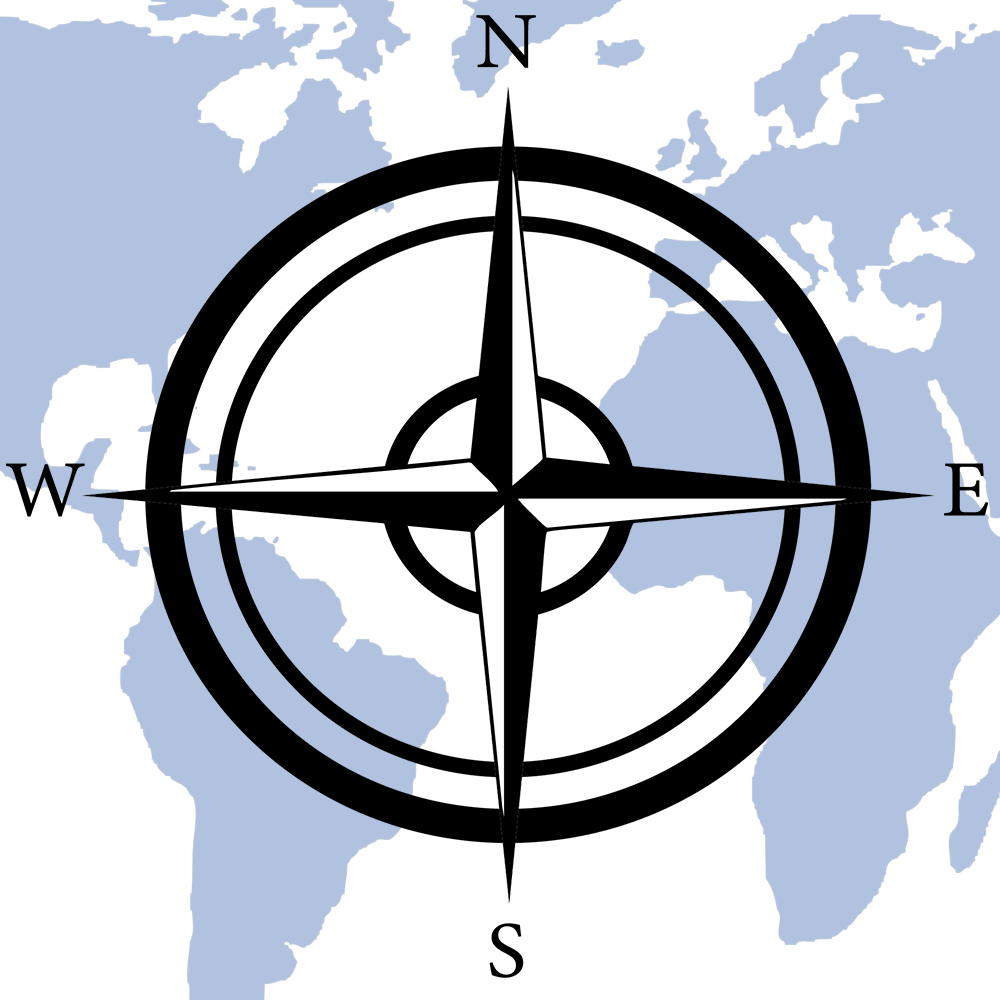
This strategy helps students reflect on learning or evaluate ideas, events, or proposals. Students will reflect on four questions representing the first letter in North, South, East, and West on a compass. This can be used across all subject areas.
True North Check-In
Summary
This strategy provides a visual anchor for students to record their responses for each point on the compass. The letters N, S, E, and W will each represent a question, scenario, or statement for students to respond to. Students can share opinions and choose sides in an argument, reflect on a book they read, or reflect on four different scenarios. The letters N, S, E, and W are meant to be modified for the activity and adjusted for the purpose of the lesson. This can be done individually or in groups. Consider using this as a preknowledge activity and having students answer the prompts again at the end of the lesson. To make this activity more engaging, put a letter in each corner of the room for students to rotate and discuss.
Procedure
1. Determine the statement or question that each letter on the compass represents.
N - New thinking - How did the lesson change your thinking?
S - Struggled - What parts were tricky or confusing?
E - Emotion - What made you feel something?
W - Wish - What do you wish had happened differently?
2. Provide students with the determined prompts either on paper or displayed on a screen/board.
3. Provide students with materials to record or discuss their answers. This can be done individually or in groups.
4. Give students time to record their responses.
5. Ask for some volunteers to share for each letter in the compass.
Project Zero, Harvard Graduate School of Education. (2019). Compass points [Thinking routine]. https://pz.harvard.edu/resources/compass-points
Publisher
Downloads
Placement In Lesson
- Engage/Opening
- Evaluate/Assessment
- Explain/Closing
- Explore/Learning Activity
- Extend/Additional Learning Activity
Intention/Purpose
- Activate Prior Knowledge
- Active Engagement
- Analyze
- Compare & Contrast
- Conversation Starter
- Critical Thinking
- Cross-Curricular
- Evaluate
- Hypothesize
- Persuade
- Physical Movement
- Reason
- Reflection
- Self-assessment
- Speak & Listen
- Synthesize
- Text analysis
This work is licensed under a Creative Commons CC BY-SA 4.0 License.
Report copyright infringement »