


Summary
What do forensic scientists do? How do they develop their skills? In this series of activities, students will gain an understanding of the knowledge and abilities necessary for a career in forensic science. This resource will help students realize that forensic scientists have a variety of opportunities to work in different settings and many fields such as criminology, pathology, and archaeology. Students will learn that forensic scientists are investigative, detail-oriented problem-solvers who collect and analyze evidence, apply scientific knowledge, and use their expertise to help solve cases. After a series of hands-on activities, students will reflect on their experience and consider whether or not a career in this field is a possible fit for them.
Essential Question
What skill opportunities exist within the field of forensic science?
Learning Objectives
Explore careers in forensic science and discuss how forensic professionals use scientific skills and evidence to investigate cases.
Apply forensic science techniques to isolate DNA, analyze fingerprints, and examine hair samples.
Classify educational pathways and income of forensic careers based on their roles and responsibilities.
Snapshot
Overview
Students learn more about professions in forensic science, various educational pathways, and experiences that can prepare them for a career in forensic science.
Activity 1: DNA Isolation
Students extract DNA from a strawberry and discuss the importance of the process of DNA collection.
Activity 2: Fingerprinting
Students practice fingerprinting techniques by creating imprints of their own fingers and analyzing the unique patterns and characteristics of each print.
Activity 3: Wet Mount
Students create a wet mount and evaluate a hair sample by examining its microscopic characteristics to determine distinguishing features.
Activity 4: Career Focus
Students investigate career opportunities available in forensic science and explore possible pathways to becoming a forensic scientist.
Materials List
Activity Slides (attached)
Chart paper (five sheets)
Chart markers (five; one per sheet of chart paper)
Laptops or iPads (one per student)
Activity 1
S-I-T handout (attached; one per student)
DNA Isolation handout (attached; one per student)
Resealable quart-sized plastic bags
Dish detergent (two tsp per student)
Salt (one tsp per student)
Water
Coffee filter
Plastic cups (two per student)
Rubbing alcohol (1/2 cup per student; keep chilled until use to help with coagulation)
Coffee stirrer, pipette, or inoculation loop (one per student)
Activity 2
Fingerprinting handout (attached; one per student)
Ink pads (link; one per student)
Plastic cups
Activity 3
Microscope Hair Analysis handout (attached; one per student)
Slides (one per student)
Pipette (one per student)
Coverslip (one per student)
Compound microscope (one per two students)
Water
Activity 4
3-2-1 Video handout (attached; optional; one per student)
Forensic Careers Card Sort (attached; one per 2–4 students)
Forensic Careers Card Sort Solution document (attached; one for teacher use)
Career Reflection handout (attached; one half sheet per student)
Preparation
Prior to beginning this set of activities, create five skill posters using the chart paper. Label each poster with one of the following skills:
Observation
Communication and Interpersonal Skills (interaction with others)
Evidence Handling
Data Collection and Analysis
Teamwork
Hang the posters around the room.
Activity 1
Prior to this activity, prepare the following materials for the lab: strawberries, resealable quart-sized plastic bags, dish detergent, salt, water, coffee filters, plastic cups, rubbing alcohol, and coffee stirrers (or pipettes or inoculation loops).
Organize the materials so you can easily pass them out to students or have students collect them during the lab.
Activity 4
Prior to this activity, review the Card Sort instructional strategy. Print multiple copies of the attached Forensic Career Card Sort document so that you have one copy per 2–4 students, or approximately eight groups of students. Cut apart the cards.
Overview
Use the attached Activity Slides to guide this series of activities. Share the title of the activity with students using slide 2.
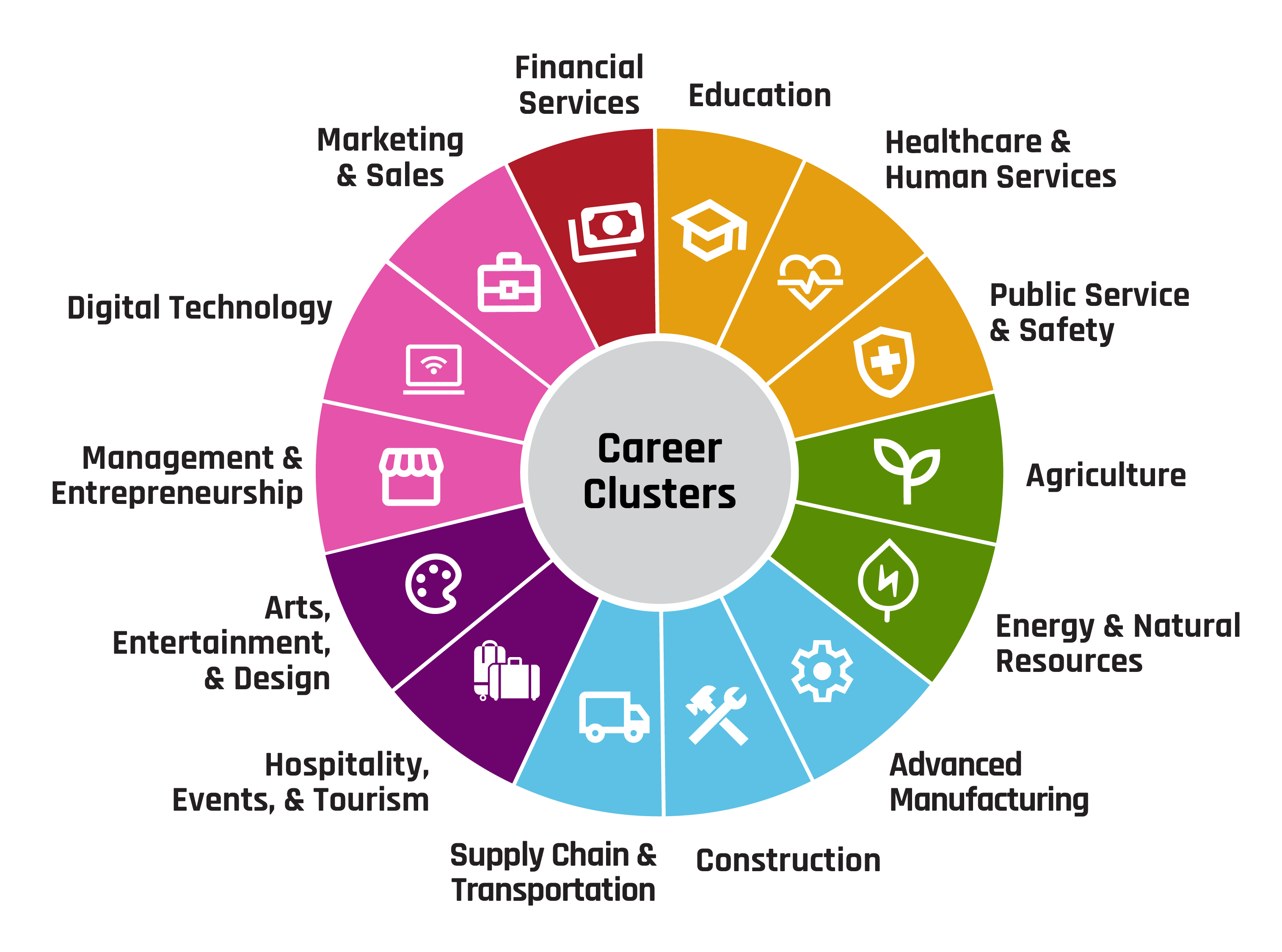
Display slide 3 and discuss the Career Clusters with students. Ask students, “Do you enjoy working with your hands, thinking creatively, running tests, and solving problems?” Encourage students to respond by raising their hands, nodding, sharing out verbally, or another preferred method.
Inform students that if they enjoy using those skills, they might enjoy a career in public service and safety. Draw students’ attention to the “Public Service & Safety” cluster on the graphic. Tell students that professionals in this cluster do things like respond to crises, protect the community, and uphold the law. Elaborate further by telling students that settings these professionals work in may be government, legal systems, military, and laboratories to provide safety or solve mysteries. Tell students that forensic science careers are a rewarding group of careers in this cluster.
Display slide 4 and provide the definition of forensic science from the American Academy of Forensic Science. Explain that a forensic science is any science used for the purposes of the law. Explain that jobs in forensic science can include crime scene investigators, DNA analysts, digital analysts, evidence technicians, forensic accountants, anthropologists, ballistics experts, and toxicologists. Tell students that the U.S. Bureau of Labor Statistics states that the average salary of a forensic scientist can be up to $72,060 per year.
Display slides 5–6 to go over the essential question and learning objectives.
Show slide 7 and introduce the modified version of the Four Corners instructional strategy. Evenly divide students into the five designated spaces you created earlier labeled with the following skills:
Observation
Communication and Interpersonal Skills (interaction with others)
Evidence Handling
Data Collection and Analysis
Teamwork
Explain that each skill is one that a forensic scientist must develop. Have students work together at their posters to generate three ideas of why that skill would be important in a forensic science profession. Then, have students select a spokesperson to share out the group’s three ideas.
After each group has shared, display slide 8. Communicate any reasons as to why those skills may be important that students didn’t address.
Move to slide 9 and explain that if students are interested in a career in forensic science, there are a few steps they can take to familiarize themselves with the career while in middle school or high school. These steps include working hard in related school subjects like science and mathematics, especially chemistry and biology.
Explain that students may also consider looking into vocational school opportunities in the field while they are in high school, if opportunities are available. Some examples of these opportunities include:
Inform students that the next activities they participate in will simulate some day-to-day tasks forensic scientists complete.
Activity 1: DNA Isolation
Go to slide 10 and give each student one copy of the attached S-I-T handout. Review the S-I-T (Surprising, Interesting, Troubling) strategy with students. Invite students to watch the next video and identify one surprising fact or idea, one interesting fact or idea, and one troubling fact or idea on the handout.
Move to slide 11 and introduce the video How to Properly Swab DNA Evidence at a Crime Scene from the National Forensic Academy. Have students individually record surprising, interesting, and troubling facts or ideas on their handouts in the “DNA Isolation” row as they watch. Allow students approximately 10–15 minutes to record their responses.
Display slide 12 and explain that DNA isolation is a procedure used by many scientists. Tell students that DNA isolation is the process of extracting DNA from an organism’s cells so it can be studied, analyzed, or used in experiments for comparison.
Display slide 13 and inform students that they will be completing a simplified DNA extraction. Pass out one copy of the attached DNA Isolation handout to each student and review the steps of DNA isolation. Have students gather the materials you previously prepared in the quantities listed in the handout. When students are prepared, have them conduct the lab using the procedures listed in the handout.
After students complete the activity, engage them in a discussion using the questions on slides 14–15.
Activity 2: Fingerprinting
Display slide 17 and have students return to the S-I-T handout. Explain that they should now record one surprising, one interesting, and one troubling fact or idea in the “Fingerprinting” row as they watch the upcoming video. Move to slide 18 and play the video How to Process Latent Fingerprints Using Non-Magnetic Powder. Have students complete the section of their handouts as they follow along. Allow approximately 10–15 minutes for students to record their responses.
Display slide 19 and share the importance of collecting fingerprints at a crime scene. Move to slide 20 and introduce the different types of fingerprints an individual can have.
Give each student one copy of the Fingerprinting handout, an ink pad, and a cup of water. Display slide 21. Guide students to create an imprint of each of their fingers by showing them how to cover the top section of the finger in ink, place the finger at the outermost edge, roll it from one side to the other, and lift from the paper. Consider providing additional examples of how to create fingerprints as needed.
Have students work individually to create an imprint of each finger.
After students make an imprint of each finger, have them analyze and identify which type of print each finger is.
Activity 3: Wet Mount
Go to slide 23 and draw students’ attention to the “Hair and Fiber” row of the S-I-T handout. If necessary, review the S-I-T strategy. Move to slide 24 and play the video How to Collect Hair and Fiber Evidence at a Crime Scene. As students watch, have them record one surprising fact or idea, one interesting fact or idea, and one troubling fact or idea in the corresponding row of the handout. Allow approximately 10–15 minutes for students to record their responses.
Display slide 25 and introduce the importance of collecting cells, like those from hair, at crime scenes.
Organize students into groups of two and display slide 26. Give each student one copy of the attached Microscope Hair Analysis handout. Then, give each pair of students one slide, one cup of water, one pipette, and one coverslip.
Have students pluck one piece of hair from their partners. Then, have students create a wet mount. Have them add the hair on to the slide, add one drop of water on top of the hair, place the coverslip at a 45 degree angle over the hair, and drop the coverslip over the hair. Have students follow the directions on the handout to examine the hair sample on scanning, low, and high power with the microscope. As they observe the hair under each power, have them draw and describe their observations.
Activity 4: Career Focus
Display slide 28 and have students use the shortened link to visit the What is a Forensic Science? page of the American Academy of Forensic Sciences’ website. The webpage offers additional information about what a forensic scientist is, expectations, and scope of practices.
Show slide 29 and organize students into groups of 2–4 students. Give each group one copy of the prepared Forensic Careers Card Sort. Tell students that they have multiple cards that they should organize into the following categories:
Career title
Required education level
Years of education needed
Salary range
Then, have students navigate to My Next Move using the QR codes or links on each of the career title cards to learn more about the individual careers in the field of forensic science. Have them read more about what each career does and what knowledge, skills, and abilities are needed in the field of forensic science.
Then, have students use the information from My Next Move to match the required education level, years of education needed, and salary range cards with the career title they correspond to. As each group finishes sorting, use the attached Forensic Careers Card Sort Solution document to check students’ work. You can display the correct answers on slide 30 or use the slide to check each group’s work yourself.
Finally, move to slide 31 and guide students to complete the career reflection activity as a whole class. Pass out one copy of the attached Career Reflection handout to each student.
Write the names of the careers students explored during the session on the board or other visible location. Then, inform students that they should choose the career that interests them the most from the options. Have them complete the handout by recording what the day-to-day job description is and describing what postsecondary education (certifications, degrees, etc.) options are available in their state relating to that career field. If students cannot find postsecondary options in their state, they should list options for a neighboring state.
Share that there are other careers related to being a forensic scientist in addition to the careers discussed in this activity. Tell students that there are also other careers in Public Service & Safety Career Cluster that they can explore. Consider sharing the link to the National Career Clusters Framework or the complete list of forensic science careers from My Next Move if students would like to learn more.
Follow-Up Activities
Navigate to the Forensic Activities Collection for more activities related to forensic careers.
Research Rationale
Research rationale for this resource is provided in the literature review Career Exploration Through Experiential Learning - Forensics.
Resources
American Academy of Forensic Sciences. (2025, October 10). What is a forensic science?. https://www.aafs.org/careers-forensic-science/what-forensic-science
Clatterbuck, C. & Burkholder, S. (2025, December 30). The ultimate guide to fingerprint patterns & how to analyze. WikiHow. https://www.wikihow.com/Different-Types-of-Fingerprints
College & Career Ready Labs. (2016, June 11). Fingerprinting technique using a 10 print card [Video]. YouTube. https://www.youtube.com/watch?v=47YLGj_yLVA
Amazon. (n.d.). CraftyManor mini 8 color pigment ink pads for stamps, fingerprint inkpads, stamp pad for scrapbook paper & wood & clothing & letter & archival [Stamp pad]. https://www.amazon.com/gp/aw/d/B0DC6C9L78
Flinn Scientific. (n.d.). A murder mystery: DNA fingerprinting, full-size lab kit, refill [Lab kit]. https://www.flinnsci.com/a-murder-mystery-dna-fingerprinting-full-size-lab-kit-refill/ap10331/
Flinn Scientific. (n.d.). DNA isolation—Super value laboratory kit [Lab kit]. https://www.flinnsci.com/dna-isolation---super-value-laboratory-kit/fb2065/
Flinn Scientific. (n.d.). Flinn scientific fingerprinting—Super value activity-stations kit [Lab kit]. https://www.flinnsci.com/flinn-fingerprinting---super-value-activity-stations-kit/ap7612/
Flinn Scientific. (n.d.). Flinn modeling, inquiry and analysis: DNA structure, full-size lab kit [Lab kit]. https://www.flinnsci.com/flinn-modeling-inquiry-and-analysis-dna-structure---student-laboratory-kit/fb2202/
K20 Center. (n.d.). Card sort. Strategies. https://learn.k20center.ou.edu/strategy/147
K20 Center. (n.d.). Four corners. Strategies. https://learn.k20center.ou.edu/strategy/138
K20 Center. (n.d.). S-I-T (surprising, interesting, troubling). Strategies. https://learn.k20center.ou.edu/strategy/926
K20 Center. (2026, September 28). Zoom into your career: Caring for communities with Caitlin Porterfield [Video]. YouTube. https://www.youtube.com/watch?v=hTCCrrQpbb4
National Forensic Academy. (2016, September 13). How to collect hair & fiber evidence at a crime scene [Video]. YouTube. https://www.youtube.com/watch?v=cfWsgS0ID-s
National Forensic Academy. (2016, September 13). How to process latent fingerprints using non-magnetic powder [Video]. YouTube. https://www.youtube.com/watch?v=V7G5lp6QigQ
National Forensic Academy. (2016, September 13). How to properly swab DNA evidence at a crime scene [Video]. YouTube. https://www.youtube.com/watch?v=2HPeZWGtjD0
Oklahoma City National Memorial Museum. (n.d.). National memorial STEM series. https://memorialmuseum.com/events/
Oklahoma State Bureau of Investigation. (2026, September 10). Tour of OSBI’s Forensic Science Center. https://oklahoma.gov/osbi/services/criminalistics-services-division/public-tours-information.html
University of Central Oklahoma. (n.d.). Intro to forensic science. https://www.uco.edu/programs/microcredentials/intro-forensic-science
University of Central Oklahoma. (n.d.). FSI summer camp at UCO. https://www.uco.edu/fsi/community/