

Summary
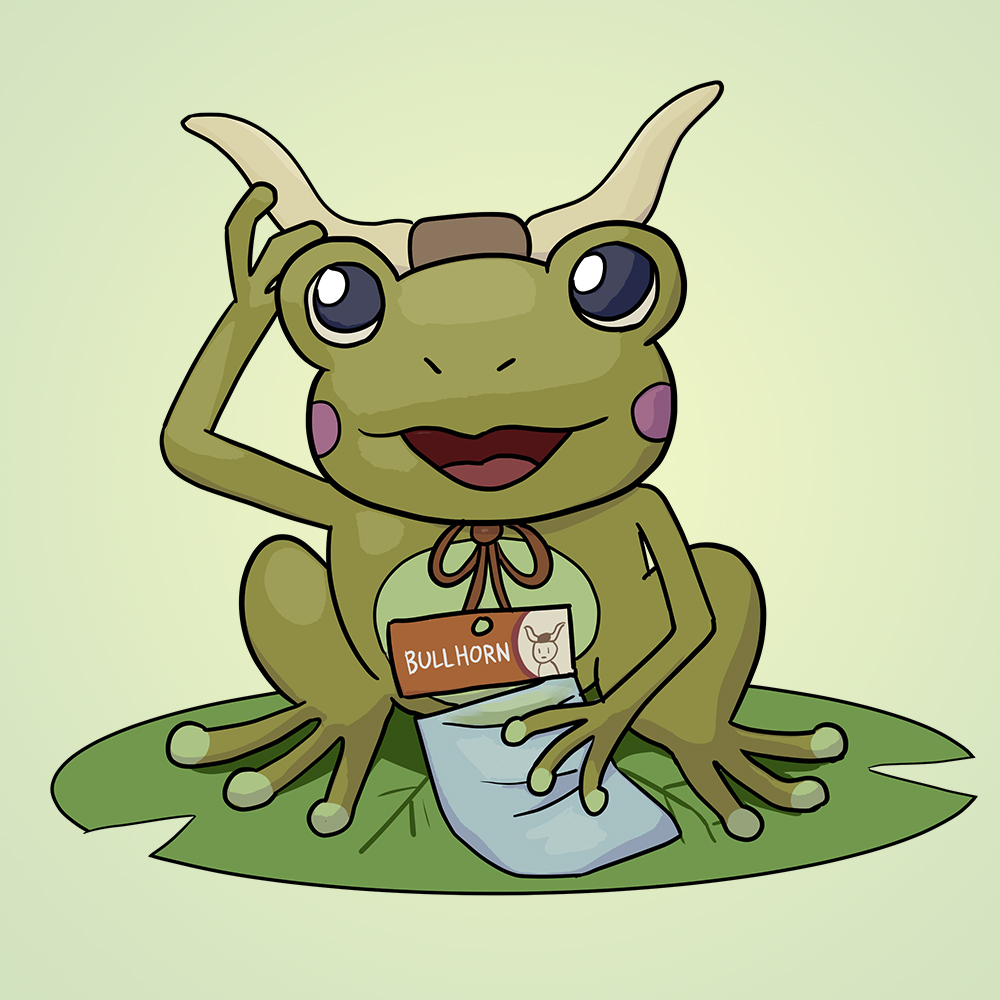
In this 2nd grade lesson, students discover how two words can be joined to form a compound word. Beginning with a read-aloud of Once There Was a Bull…Frog, students use Elbow Partners to recall story words—bullfrog, toadstool, cowboy—and notice that each word is built from two smaller words. Through guided discussion, they test a working definition against questionable examples, then use Card Matching to generate new examples before illustrating their own on a trifold foldable for a class word wall. Students then listen to an extension story and use the Not Like the Others strategy to identify compound and non-compound words within sets of related words.
Essential Question(s)
How can I read big words and know what they mean? How are compound words different from other words?
Snapshot
Engage
Students listen to Once There Was a Bull…Frog and predict story characters, building curiosity and prior knowledge that the story will convert into compound word awareness.
Explore
With Elbow Partners, students recall the story's characters and objects, then share and read them aloud as a class, noticing that each is built from two smaller words.
Explain
Students examine borderline cases (such as river and napkin) to test a working definition of compound words, then use Card Matching cards to generate new examples before illustrating their own on a trifold foldable for a class word wall.
Extend
Students listen to an extension story, “An Afternoon with Salamander,” and use a whole-class response strategy to sort underlined words as compound or not compound.
Evaluate
In small groups students apply their understanding by using the Not Like the Others strategy to identify the non-compound word in each of ten sets.
Materials
Once There Was a Bull…Frog, Rick Walton (book, ISBN 978-1423620808) or the video version at https://www.youtube.com/watch?v=7UM6XxCVPSM
Lesson Slides (attached)
Card Matching Cards (attached, cut and laminate, one set per group)
An Afternoon with Salamander (attached, optional, one copy per student or group)
An Afternoon with Salamander—Key (attached, one copy per instructor)
Not Like the Others (handout, attached, cut into half sheets, one per student or group)
Not Like the Others—Key (handout, attached; one copy per instructor)
Compound Words Hunt (attached; one copy per student)
Chart paper
copy paper
dry erase boards and markers (optional)
Preparation
10 Minute(s)
Print and cut the Card Matching cards, using two colors of paper: one color for Component 1 and another for Component 2. Make as many sets as you would need for partner groups in your class and laminate for future use. These cards will be used in the Explain section.
Engage
10 Minute(s)
Use the attached Lesson Slides to follow along with the lesson. Begin the lesson by displaying slides 3-4 if desired and tell students that today they are going to listen to a book about a frog -- and not just any frog but a bullfrog! Show the cover of the book.
Ask students questions like:
Does anyone have any ideas what this book might be about?
What other characters might be in the book?
Bulls, cows, cowboys, cowgirls, frogs etc.… What made you think of these?
Ah yes, the cowboy hat, the blue sky, the frog.
Write these names on a chart.
Prompt students, “So let’s find out who and what are in this book!” Read Once There Was a Bull…Frog or display slide 5 to view.
Explore
20 Minute(s)
After reading or viewing the story, have students talk with an Elbow Partner about objects and characters the frog visited to find his hop! You might have to flip back and look at the book again.
Ask students who is the main character? Bullfrog! Write this on your chart as bullfrog = bull + frog.
Then have each pair of students give you one of the words they discussed. Write these clearly on chart paper. Possible answers:
bullfrog
toadstool
doghouse
hedgehog
boxcar
grasshoppers
cowboy
strawberries
catfish
ladybug
rattlesnake
sunflowers
stagecoach
horsefly
Ask students what they noticed about these words and what they have in common.
Have the class read the words aloud and tell you what the two words are that the bigger word is made from. If necessary, draw pictures to illustrate the thinking process, as in cow + boy = cowboy.
Continue in the same way, writing example words on the chart, continuing with toadstool = toad + stool, etc. If desired, reinforce this concept by showing slides 6-8.
Explain
40 Minute(s)
After exhausting the list in the Explore section, suggest adding another non-compound word like river. Ask students if river would fit on the list. Ask them to explain why or why not.
Pose another word, such as napkin. Ask, “What about napkin? Would it fit? It is made of two words nap + kin. Nap means to sleep and kin means a relative—so is napkin a sleeping relative?” Laugh with the kids!
Title your word chart “Compound Words.” Collaborate with the class to write a definition for what a compound word is and write that on chart paper.
Guide students toward agreement that a compound word is formed by joining two complete, recognizable words together to make a new word with a unique meaning.
Pose the question, "Where else do you think Bullfrog and his friends could go to find his hop?"
Have students work with a partner or in groups of three. Distribute the modified Card Matching cards. Explain that each word-starter card (Component 1 words printed on one color of paper) will match with at least one word-ender card (Component 2 words printed on a different color of paper). Create context for this activity by asking students if they can think of somewhere else bullfrog could have gone to look for his hop that would fit this list. If needed, offer some hints to get them started. For instance, the starter word play- might be correctly paired with ending-words to create playground, playhouse, and playroom. Give students time to think and work in pairs, using dry erase boards to jot down their ideas.
After several minutes, reconvene the groups and add their compound words to the anchor chart list.
Next, give each student a piece of copy paper and have them trifold the paper. Have students choose words from the list or allow them to choose their own to illustrate on their trifold paper in the same way the cow + boy = cowboy pictures are illustrated on slide 8.
When completed, have students meet in groups of four to share their compound words. Display papers in the classroom as a Compound Word Wall.
Extend
20 Minute(s)
Use the An Afternoon with Salamander (Key) to tell an extension story of another day in the life of Bullfrog.
Students will use identified words from the story to determine whether each word is a compound word or not. First, read the story together. Then have students focus on the underlined words and decide whether each one is a compound word or not. If using the slides, display slides 9-34 so that students can clearly see the words as they make their decisions.
Evaluate
15 Minute(s)
Form partners or groups of three and display slides 35-36 to share the instructional strategy Not Like the Others with your students. Alternatively, distribute copies of the Not Like the Others handout. Allow time for students to discuss their thinking with their partner(s) before reviewing the answers. For groups that finish early, have them identify how the words are related. Refer to the Not Like the Others Key if necessary.
toothpaste, napkin, hairbrush
picture, birthday, cupcake
backpack, problem, classroom
grasshopper, salamander, bullfrog, rattlesnake
bedroom, mailbox, carpet, doorbell
hospital, airport, bookstore, library
freeze, playground, teammate, cartwheel
washcloth, bathtub, mirror, curtain
snowflake, thunder, lightning, raindrop
sunglasses, beachball, blanket, surfboard
Opportunities for Advanced Learners
60 Minute(s)
Students identify compound words in additional books and then complete the Compound Word Hunt handout.
Resources
Bay, R. (n.d.). Oyster mushroom – 2. [Photograph]. Adobe Stock.
Bronwyn Photo. (n.d.). Sheep in barnyard. [Photograph]. Adobe Stock.
Erik. (n.d.). Monarch caterpillar on milkweed leaves. [Photograph]. Adobe Stock.
Google. (2026). Clock showing 1:15 p.m. [Image generated by Gemini].
Google. (2026). AI-generated drawing of mail, a box, and a mailbox. [Image generated by Gemini].
Google. (2026). AI-generated drawing of snow, a man, and a snowman. [Image generated by Gemini].
Hamilton. (n.d.). Spotted salamander on a lichen-covered rock (Ambystoma maculatum) [Photograph]. Adobe Stock. Asset ID: 335153727
Hofacker, B. (n.d.). Healthy organic applesauce with cinnamon. [Photograph]. Adobe Stock.
K20 Center. (n.d.). Card matching. Strategies. https://learn.k20center.ou.edu/strategy/1837
K20 Center. (n.d.). Elbow partners. Strategies. https://learn.k20center.ou.edu/strategy/116
K20 Center. (n.d.). Not like the others. Strategies. https://learn.k20center.ou.edu/strategy/77
K20 Center. (n.d.). Sounds right? Sounds off? Strategies. https://learn.k20center.ou.edu/strategy/4991
K20 Center. (n.d.). Walking vote. Strategies. https://learn.k20center.ou.edu/strategy/4126
K20 Center.(2025). An afternoon with salamander. [Short story generated with AI assistance from Claude, edited by M Kraus].
Kraus, M. J. (n.d.). Sunset. [Photograph]. Flickr. https://www.flickr.com/photos/kraus/55262863152/
m.lexandrovna. (n.d.). Round brown sunglasses isolate. (AdobeStock_536803548) [Stock photograph]. Adobe Stock.
nanskyblack. (n.d.). Handshake isolated on white background. [Stock photograph].
OpenAI. (2026, April 3). AI-generated drawing of a cow, a boy, and a cowboy. [Image generated by ChatGPT].
Peter. (n.d.). Monarch butterflies (Danaus plexippus). [Stock photograph].
Pixel-Shot. (n.d.). School backpack on white background. [Photograph]. Adobe Stock. Asset ID: 276472512
Pixel-Shot. (n.d.). Ripe blueberries on white background. [Photograph]. Adobe Stock. Asset ID: 276472512
StoryTime with Charlie. (2021). Once there was a bull(frog) [Video]. YouTube. https://www.youtube.com/watch?v=7UM6XxCVPSM
zozulinskyi. (n.d.). Tranquil underwater scene 3D render. [3D render]. Adobe Stock.