

Summary
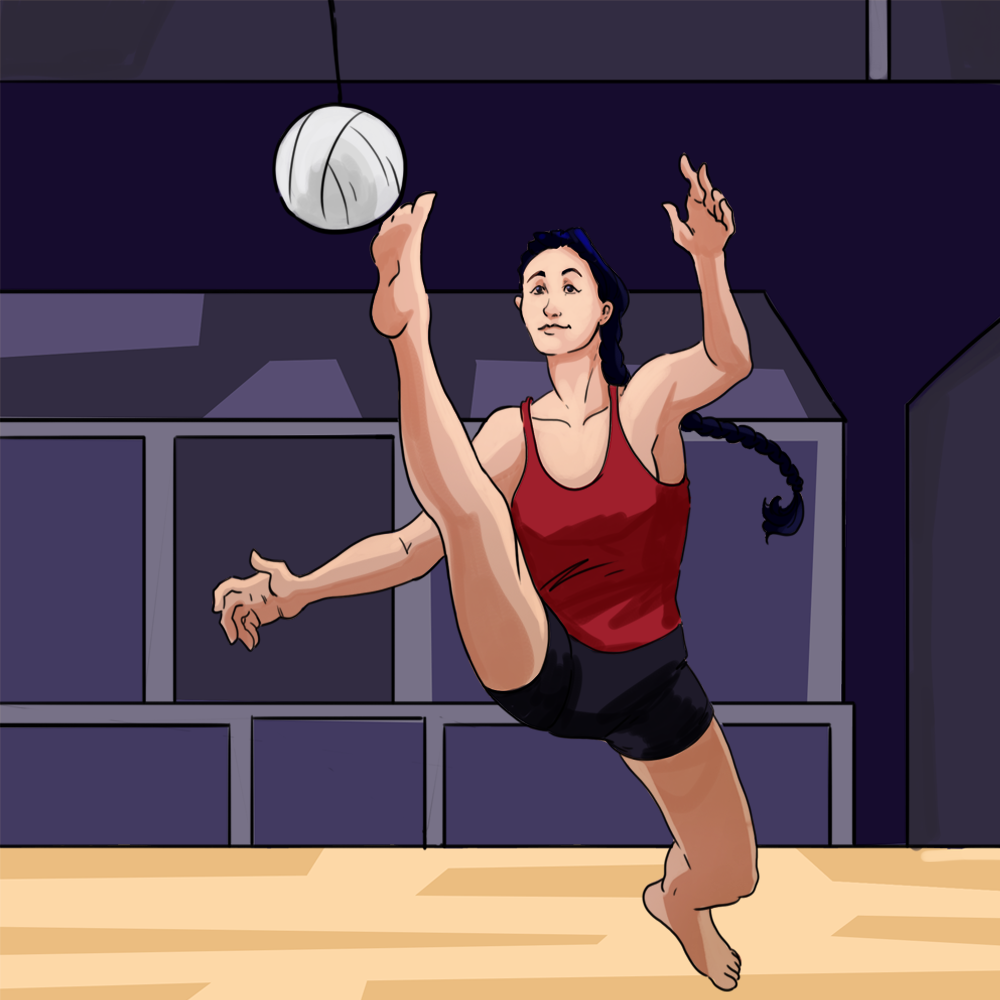
In this lesson, students explore Newton’s Laws of Motion through the lens of the Native Youth Olympics. By engaging in movement-based science stations and analyzing force, mass, and acceleration, students connect physics concepts to ancestral heritage and traditions. The lesson culminates with student-designed games that reflect how students integrate scientific understanding with ancestral heritage.
Essential Question(s)
In what ways do Newton’s Laws of Motion apply to movements and games rooted in ancestral heritage and traditions?
Learning Objectives
Analyze motion using Newton’s Laws by identifying how force, mass, and acceleration are demonstrated in physical activities rooted in ancestral heritage and traditions.
Design an original, movement-based game or event inspired by ancestral heritage, incorporating scientific explanations of force, motion, and safety design.
Construct force diagrams to explain how the net force and mass of an object affect its acceleration during motion.
Snapshot
Engage
Students watch a video on the Native Youth Olympics and complete a Preflection to capture their initial thoughts on its ancestral heritage and scientific connections.
Explore
Students rotate through stations to investigate Newton’s Laws of Motion, observing and analyzing forces in action.
Explain
Students create force diagrams and presentations connecting their observations to Newton’s Second and Third Laws, sharing findings in a gallery walk with peer questions.
Extend
Students design and present an original movement-based game inspired by ancestral heritage that integrates Newton’s Laws.
Evaluate
Students revisit and expand their initial Preflections, demonstrating deeper understanding of the ancestral heritage and scientific concepts learned.
Materials
Lesson Slides (attached)
Preflections handout (attached; one per student; print one-sided)
Station Guide handout (attached; one per student; print one-sided)
Wrist Carry Images handout (attached; one copy for one station)
Design Guidelines handout (attached; one per group)
Post-it Notes (two stacks per group)
Native Youth Olympic Games 2024 video (linked)
Inuit Stick Pull video (linked)
Seal Hop video (linked)
Scissor Broad Jump video (linked)
Kneel Jump video (linked)
Wrist Carry video (linked)
Preparation
Station Preparation
Use the following notes to set up each station with the correct materials needed to complete it.
General Notes:
Place students into groups of 3–4.
Encourage students to observe carefully, take notes, and focus on force, motion, and mass.
Safety: Ensure that there is enough space for movement-based activities and that students are aware of proper lifting techniques.
Station 1: Native Youth Olympic Games 2024 (Whole-Class)
Purpose: Introduce NYO events and cultural context; model the S-I-T (Surprising, Interesting, Troubling) strategy.
Materials:
Projector/large screen
Station Guide
Station 2: Inuit Stick Pull
Purpose: Explore Newton’s Third Law and the effect of mass on force.
Materials:
Video: Inuit Stick Pull
Short thick sticks (3 or 4, more if preferred)
Open floor space
Station Guide
Station 3: Seal Hop
Purpose: Investigate mass, force, and acceleration (Newton’s Second Law).
Materials:
Video: Seal Hop
Marked floor distance for hops
Weighted backpacks (textbooks)
Stopwatch
Station Guide
Station 4: Scissor Broad Jump
Purpose: Analyze direction and strength of forces’ effect of mass.
Materials:
Video: Scissor Broad Jump
Open floor space with distance preference marked
Station Guide
Station 5: Kneel Jump
Purpose: Explore action-reaction forces (Newton’s Third Law) and body position impact.
Materials:
Video: Kneel Jump
Open floor space
Paper or digital access to diagram forces
Station Guide
Weighted backpacks for added challenge (optional)
Station 6: Wrist Carry
Purpose: Examine mass, force, and team dynamics—Newton’s Second Law in action.
Materials:
Video: Wrist Carry
The Wrist Carry Images handout
Station Guide
Engage
15 Minute(s)
Begin by using the attached Lesson Slides to review the learning objectives and essential question on slides 3–4.
Display slide 5 and pass out the attached Preflections handout to each student. Review the Preflections instructional strategy. Ask students to look over the following questions but not answer them yet:
What do you think you will be learning about?
How do you think it might be connected to science concepts such as Newton’s Laws?
What questions do you have after watching the video?
Ask students if they have ever heard of the Native Youth Olympics (NYO). Explain that this is an event that takes place annually in Alaska to honor the ancestral heritage and traditions of Alaskan Native communities.
Move to slide 6 and play the following video for students:
Encourage the students to think about the questions while watching the video. Once the video is complete, move to slide 7 and review the Preflection questions with students again. Begin the five-minute timer and have students respond to the questions on their handout. While the students write down their answers, walk around the room to offer help and guidance as needed.
Tell students that you will revisit these questions again at the end of the lesson. Collect the Preflections handouts when the students are finished.
Explore
60 Minute(s)
Pass out the attached Station Guide handout to each student. Place students into groups of 3–4. Tell students that they will participate in six different stations. Additionally, explain to them that the first station will be completed as a class, but they will rotate through the remaining stations in their groups.
Display slide 8 and direct students' attention to their Station Guide handout and tell them that they will complete “Station 1: Native Youth Olympic Games 2024” as a whole class. Review the S-I-T instructional strategy with students. Explain that as they watch a video about the Native Youth Olympics, they should pay close attention to what stands out.
Move to slide 9 and play the following video:
While students watch the video, they should complete the S-I-T activity on their handout and write down what they found to be surprising, interesting, and troubling. Encourage students to record anything that catches their attention such as facts, actions, or ideas.
Invite students to share their S-I-T responses with the class. Make sure to actively listen and respond to any strong or interesting points made by students.
Transition to slide 10. After completing Station 1 as a class, explain the expectations or instructions of each station. Make sure the students follow along with their Station Guide handout during the explanations.
At this time, direct student groups to the remaining five stations and allow 7–8 minutes for groups to participate in each station, rotating after the time is up. Students are to complete each station and fill out their station guide as a group. Make sure to walk around the room and be available to support students as needed.
Station 2: Inuit Stick Pull
Have students first watch NYO’s demonstration of the Inuit Stick Pull.
After watching the demonstration, encourage two students from each group to try the Inuit Stick Pull. The students should sit facing each other, legs extended, and the soles of their feet touching. They should hold the short stick between them. One student should place their hands on the outside of the stick, and the other should put theirs on the inside of the stick. The task is to try and pull the stick away from the opponent or pull them off the floor, using only your hands. Players may not jerk or twist the stick, and if their hands begin to slip, they are not allowed to re-grip.
The students are expected to record the characteristics of each participant (muscular, tall, short, lean—anything that would contribute to winning the match). They also should record which participant moved (lost) and the direction of the force. Since you won’t measure the distance traveled of the losing participant, their observations should be qualitative.
Questions to answer:
What happened when both students pulled on the stick with equal force?
Who moved more, and what does that tell you about force and mass?
How is Newton’s Third Law demonstrated in this activity?
Station 3: Seal Hop
Watch NYO’s demonstration of the Seal Hop.
Afterward, two students from each group should try the seal hop. This activity involves the students “hopping” forward while in a push-up position with flat palms or balled up fists only. To explore the impact of mass, one participant should wear a weighted backpack (filled with textbooks).
Set up the station by marking the distance that the students should “seal hop” between. Each student should be timed, and the time should be recorded. Compare the time it takes the weighted student (the one wearing the backpack) to complete the task and the time of the unweighted student.
Questions to answer:
How did adding mass affect the motion of the seal hopper?
What force(s) were acting against the participants during this movement?
What can you infer about the connection between mass and acceleration?
What can you infer about the relationship between force, mass, and acceleration?
Station 4: Scissor Broad Jump
Watch NYO’s demonstration of the Scissor Broad Jump. The students should draw a diagram showing the jumper in mid-air. The diagram should include labeled force arrows that are acting on the jumper such as gravity, the push-off force, air resistance, etc.
After watching the demonstration, the students may attempt the activity and work together to answer the questions below:
What forces are at work when the athlete jumps forward?
How does the direction and strength of the jump affect distance?
How would adding mass change the jump?
Station 5: Kneel Jump
Watch NYO’s demonstration of the Kneel Jump event, where an athlete launches themselves forward from a kneeling position. The students are to produce and label a diagram showing the action-reaction force pairs. Students will need to identify the direction of the push and the direction of the resulting motion.
After the demonstration, students should work together to answer the questions below:
What is the action force in the movement? What is the reaction force?
How is Newton’s Third
Law shown when the athlete leaves the ground?
What role does body position play in maximizing force?
Station 6: Wrist Carry
Instructions: Watch NYO’s demonstration of the Wrist Carry event, where one student is lifted off the ground while gripping a stick held by two others.
The students need to observe the differences in effort required to lift each type of student and discuss how mass affects the amount of force needed.
Students should review the images provided on the attached Wrist Carry Images handout.
Questions to answer:
Which body type would require the most force to lift and why?
How does this connect to Newton’s Second Law? (F=ma)?
What variables could be adjusted to increase or decrease the difficulty?
Explain
50 Minute(s)
Display slide 11 and ask students to scan the provided QR code and review the different NYO games and events. There are enough events that no groups should have the same one. To avoid duplicates, consider asking each group to announce their chosen event.
Move to slide 12 or slide 13 depending on the grade level you are teaching. Ask each group to create a poster or digital slide over their event that includes the following:
8th Grade Students:
Draw and label a force diagram that shows the forces acting on the athlete during the movement. Include the direction of forces and label the applied force, gravitational force, normal force, and friction (if relevant).
A brief explanation (4–6 sentences) connecting the diagram to Newton’s Laws.
Use Newton’s Third Law to describe the action-reaction forces involved in the movement. Example: The athlete pushes down on the ground, and the ground pushes up with an equal and opposite force.
Use Newton’s Second Law to explain how the athlete’s mass and net force affect their motion. Example: A stronger push or smaller mass leads to faster motion.
High School Students:
Draw and label a force diagram showing the net force acting on the athlete during the event. Identify and label: All external forces and the direction of acceleration.
Analyze how the net force and the athlete’s mass affected their motion using Newton’s Second Law. (F=ma). Example: If the athlete applied more force with the same mass, they accelerated more.
Describe how you might design or modify something in the event (like the landing surface or footwear) to reduce the force on the athlete’s body during a collision or landing. Example: Adding padding to reduce impact force.
Allow up to 30 minutes for the groups to create their poster or digital slide.
Move to slide 14 and pass out two small stacks of Post-it notes, ensuring that each group receives two different colors. Review the Gallery Walk instructional strategy and explain to students that they will move as a group to review their classmates' presentations. Tell groups that they will be using one of the colored Post-it notes to pose a question about presentations and the other colored Post-it should be used for any comments about the presentations. Groups are to write at least one question and one comment for each presentation. Allow groups 10–15 minutes to participate in the Gallery Walk activity.
Allow the groups to look over the questions placed on their poster. Allow groups a few minutes to respond to any questions and comments posed about their presentation. Make sure someone is holding up their poster (or make sure their digital slide is displayed) while the group is answering the questions.
Extend
45 Minute(s)
Keep students in their small groups. Display slide 17 and explain that they will design an original, movement-based game inspired by ancestral heritage. Pass out the Design Guidelines handout to each group and review it with the class.
Tell students that they can do any of the following to design a new game or event inspired by the Native Youth Olympics:
Modify a current NYO event.
Select a movement from your own ancestral heritage.
Create your own movement-based activity inspired by ancestral heritage.
Move to slide 18 and let students know that the goal is to create a movement-based game that connects to ancestral heritage and science. Their game should show respect for ancestral traditions and include examples of Newton’s Laws of Motion. They should be able to explain how their event involves force, mass, acceleration, and/or action-reaction forces. The game must include at least one moment where two objects interact or collide (such as an athlete and the ground, equipment, or another player), and you must explain the action–reaction force pair involved.
Tell them that they’ll present their event in class, where they’ll show how it’s played, explain the science behind it, and share the ancestral heritage or story that inspired it
Allow groups time to work on their event. Circulate the room and offer support and guidance as needed.
Once students have completed their assignment, allow time for each group to present their event to the class. They will need to explain the movements, provide a scientific explanation, and share the ancestral heritage or story behind it.
Evaluate
5 Minute(s)
To wrap up the lesson, return to the Preflection strategy you introduced at the beginning. By now, students have experienced the full depth of the lesson, from watching the Native Games: Origins video to engaging in hands-on stations and analyzing the science behind movement. They should now have a much deeper understanding of the Native Youth Olympics, both in terms of ancestral heritage and science.
Display slide 19 and pass the original Preflection handouts back to the students. Let them know they will now revisit their earlier responses. Encourage them to read what they originally wrote and reflect on how their thinking has changed or deepened. Ask students to add, revise, or expand on their answers using what they’ve learned throughout the lesson.
Resources
K20 Center. (n.d.). Gallery walk/carousel. Strategies. https://learn.k20center.ou.edu/strategy/118
K20 Center. (n.d.). Preflections. Strategies. https://learn.k20center.ou.edu/strategy/191
K20 Center. (n.d.). S-I-T (Surprising, interesting, troubling). Strategies. https://learn.k20center.ou.edu/strategy/926
K20 Center. (2026, March 2). K20 Career-Focused – Athletic Training with Rachel Allen [Video]. YouTube. https://www.youtube.com/watch?v=h0N2-VVvhF4
K20 Center. (2021, Sept. 21). K20 Center 5 minute timer [Video]. YouTube.
CITC Alaska. (2019a, February 4). How to: Eskimo Stick Pull [Video]. YouTube. https://www.youtube.com/watch?v=v1kl9mEuEAE
CITC Alaska. (2019d, February 5). How to: Kneel Jump [Video]. YouTube. https://www.youtube.com/watch?v=gW8qyJJrtdA
CITC Alaska. (2019d, February 5). How to: Seal Hop [Video]. YouTube. https://www.youtube.com/watch?v=l6l27wrMPZ4
CITC Alaska. (2019d, February 5). How to: Scissor Broad Jump [Video]. YouTube. https://www.youtube.com/watch?v=jBLdTXabGDI
CITC Alaska. (2019g, February 5). How to: Wrist Carry [Video]. YouTube. https://www.youtube.com/watch?v=eJIbNz9jwnI
CITC Alaska. (2019b, February 4). Native Games: Origins [Video]. YouTube. https://www.youtube.com/watch?v=TvpAREkxGlg
Native Voice One. (2024, June 10). Native Youth Olympic Games 2024 [Video]. YouTube. https://www.youtube.com/watch?v=3lJ4kTAHcv4